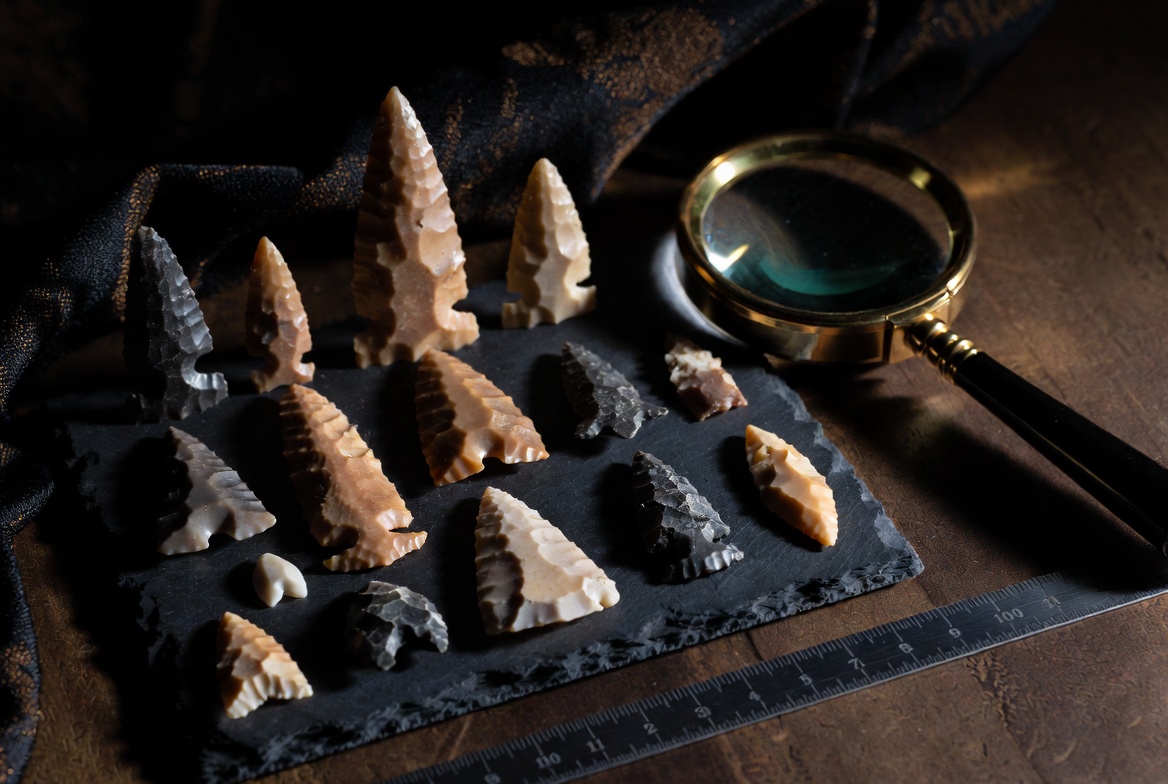
Identifying authentic Native American projectile points from the Great Lakes region requires careful observation of shape, flaking patterns, notching, and raw material.
| Point Type | Time Period | Shape & Characteristics | Notching | Common Materials | Typical Size |
|---|---|---|---|---|---|
| Clovis | Paleo-Indian (13,000+ years ago) | Lanceolate, fluted base, concave base | None (fluted) | Upper Mercer, Flint Ridge, Bayport Chert | Large (3–5 inches) |
| Gainey | Early Paleo | Similar to Clovis but deeper basal concavity | None (fluted) | Bayport, Kettle Point | 2.5–4 inches |
| Brewerton | Archaic (6,000–3,000 BP) | Triangular to stemmed, thick | Side-notched | Local cherts | 1.5–3 inches |
| Lamoka | Archaic | Narrow, stemmed, thick cross-section | Stemmed | Local cherts | 1.5–2.5 inches |
| Side-Notched | Middle to Late Woodland | Triangular blade, wide shoulders | Deep side notches | Bayport, Burlington | 1–2.5 inches |
| Madison | Late Woodland / Mississippian | Small, thin, isosceles triangle | None or basal | Varied cherts | 0.75–1.5 inches |
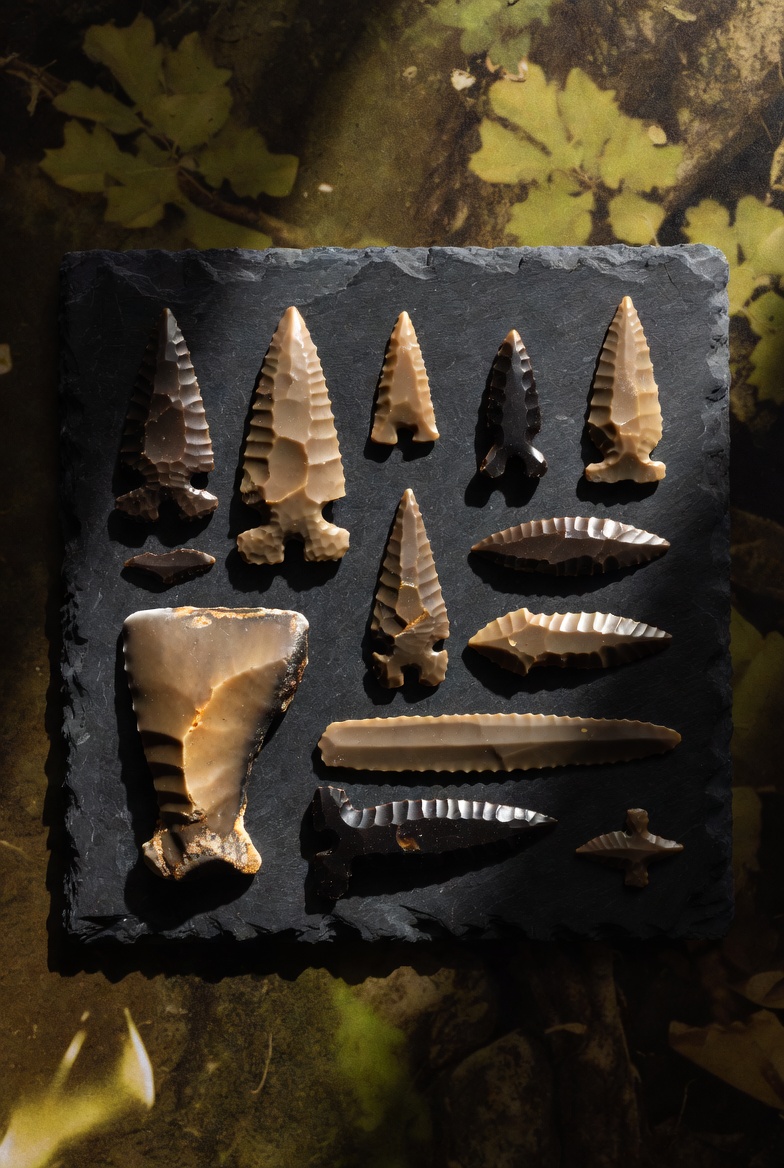
Have a point you'd like identified? Feel free to contact us.